01
The Taj Mahal
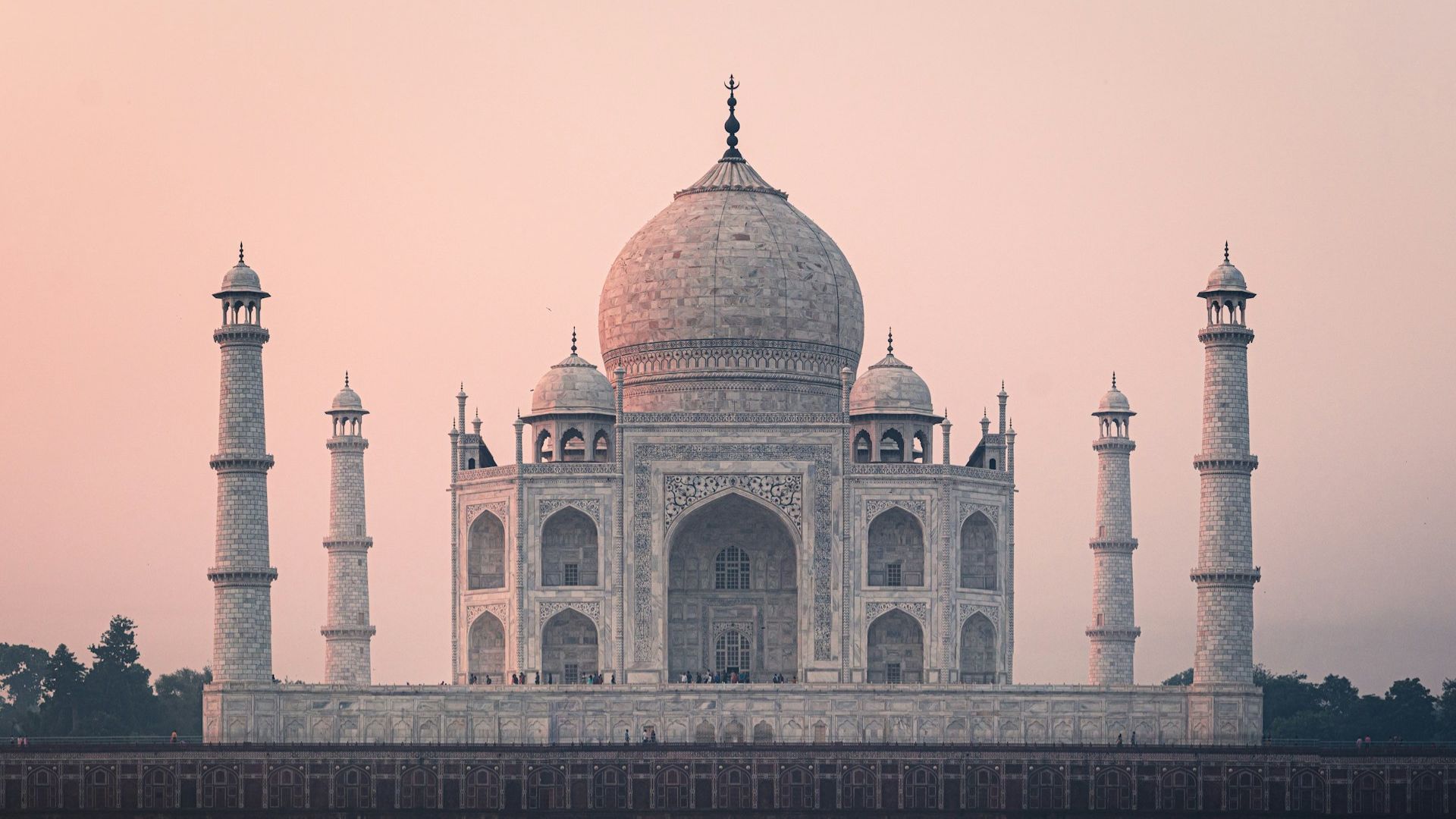
The Taj Mahal is the defining experience of Agra. GTTC's sample journeys place the visit in the early morning, allowing it to become a considered part of the wider journey rather than something rushed between other activities.
India Travel Guide
A considered guide to experiencing Agra, from the Taj Mahal and Mughal heritage to the quieter details of planning a private journey through the Golden Triangle.
The city is more than a stop between Delhi and Jaipur. With the right pace, Agra can become one of the defining chapters of a North India journey.
The Mughal Heart of the Golden Triangle
For many international travellers, Agra is first associated with one extraordinary monument: the Taj Mahal. Yet the city has a broader role within a private Golden Triangle journey, connecting the modern capital of Delhi with the royal heritage of Jaipur.
GTTC's sample journeys approach Agra as a destination in its own right. The road journey from Delhi is followed by time to settle into the hotel, with Agra Fort and Mehtab Bagh forming part of the afternoon or evening experience before the Taj Mahal is visited the following morning.
This sequencing allows Agra's principal experiences to remain distinct. Rather than rushing from one landmark to another, the journey can give each place enough space to be understood and enjoyed.
Experiencing Agra
The strongest Agra experiences do not require a long list of activities. They come from giving the principal experiences the right timing and enough space around them.
01
The Taj Mahal is the defining experience of Agra. GTTC's sample journeys place the visit in the early morning, allowing it to become a considered part of the wider journey rather than something rushed between other activities.
02
Agra Fort provides a different perspective on the city's Mughal heritage. It can work naturally as an afternoon experience after arrival in Agra, particularly when the day is structured around the journey from Delhi.
03
Mehtab Bagh offers views of the Taj Mahal across the Yamuna River and can provide a quieter counterpoint to the principal monument. GTTC's sample journeys place it after Agra Fort during the softer afternoon or evening light.
04
Agra is also a transition point within the Golden Triangle. The following morning can begin with the Taj Mahal before the journey continues towards Jaipur, with Fatehpur Sikri fitting naturally en route when appropriate.
The Defining Experience
The Taj Mahal is the defining reason many travellers come to Agra. Its importance within the Golden Triangle means that the visit deserves to be given enough space rather than treated as another item on a long sightseeing list.
GTTC's sample journeys begin the Taj Mahal visit early in the morning. After the visit, travellers return to the hotel for breakfast and check out before continuing towards Jaipur.
This sequencing creates a natural rhythm: the principal Agra experience has its own part of the day, followed by the onward journey rather than being compressed into an already crowded arrival day.
For travellers interested in history, architecture or photography, private guiding can add context without requiring every moment of the day to be structured around sightseeing.
Beyond the Taj Mahal
The city becomes more meaningful when the Taj Mahal is understood within the wider heritage of Agra.
Agra Fort
Agra Fort can provide historical context that complements the Taj Mahal. GTTC's sample journeys place the fort during the afternoon following arrival from Delhi, creating a logical first experience of Agra.
Mehtab Bagh
Mehtab Bagh offers a different perspective of the Taj Mahal across the Yamuna River. In GTTC's sample journey it follows Agra Fort and provides a quieter experience during the softer evening light.
Practical Planning
Agra works best when its own rhythm is considered alongside the road journey that brings you there and the onward route towards Jaipur.
GTTC's sample journeys allow approximately 3.5–4 hours for the Delhi to Agra road journey. The exact timing can vary with traffic, departure timing and road conditions.
After arriving and settling into the hotel, Agra Fort and Mehtab Bagh can provide a balanced afternoon without trying to fit every possible sight into the first few hours.
The Taj Mahal is positioned early in the following day in GTTC's sample journeys. This allows the principal experience to have its own space before breakfast, check-out and the onward journey.
Agra and Jaipur form a natural continuation of the Golden Triangle. The route can include Fatehpur Sikri en route when it fits the available time and preferred pace.
Road times are indicative and can vary with traffic, departure timing, road conditions and stops. The approximately 3.5–4 hour Delhi–Agra period reflects GTTC's sample journey planning where stated.
The Golden Triangle
Agra occupies a natural middle position within the classic Golden Triangle. Delhi introduces the journey through the capital's contrasting historic and modern character, while Jaipur continues into Rajasthan's royal heritage.
GTTC's sample journeys generally move from Delhi to Agra, then from Agra towards Jaipur. The Agra–Jaipur journey is approximately five hours in sample planning, with Fatehpur Sikri included en route when appropriate.
This makes sequencing especially important. The Taj Mahal can be visited early before breakfast and check-out, after which the journey continues towards Jaipur rather than attempting to fit another full sightseeing programme into the same morning.
Possible Journey Styles
Agra can remain focused or become part of a longer private journey. The right structure depends on how much time you have and what you want the journey to feel like.
The classic Delhi–Agra–Jaipur route gives Agra a clear role within the journey: the transition from Delhi into Mughal heritage before continuing towards Rajasthan.
Travellers with additional time can use a second night to create more breathing room around the Taj Mahal, Agra Fort and leisure rather than simply adding more sightseeing.
For longer private journeys, Agra can remain part of a wider route through North India and Rajasthan. The important consideration is how the destination contributes to the whole journey.
A Considered Approach
The temptation with a landmark as significant as the Taj Mahal is to fill the entire day around it. A more considered approach is to let the principal experiences breathe.
The principal Agra experiences are stronger when they are sequenced thoughtfully rather than treated as a checklist.
The Delhi–Agra transfer takes part of the day. The itinerary should acknowledge that travel time rather than pretending it does not exist.
The timing of the Taj Mahal visit can influence the character of the experience. GTTC's sample journeys use an early morning visit before the onward journey.
Agra is not an isolated stop. The following journey towards Jaipur, including a possible visit to Fatehpur Sikri, should influence how the Agra day is planned.
The GTTC Approach
Agra's importance does not come only from the Taj Mahal. It comes from the way the city fits into the wider story of a journey through North India.
A private itinerary allows the timing of the Taj Mahal, Agra Fort, Mehtab Bagh, the hotel stay and the onward road journey to be considered together. The result is a day that feels intentional rather than crowded.
Continue Planning
Golden Triangle
Begin the journey with the contrasting heritage and character of India's capital.
Golden Triangle
Continue from Mughal heritage into the royal legacy of Rajasthan.
Rajasthan Extension
Consider adding wildlife to a longer Golden Triangle journey.
Rajasthan Extension
Extend the journey into a slower and more reflective Rajasthan experience.
Private Travel
Build the wider route around your interests, comfort and preferred pace.
Practical Planning
Understand how road travel influences the rhythm of the route.
Frequently Asked
One night can work well for a focused introduction to Agra, particularly when the Taj Mahal and Agra Fort are priorities. Two nights can create a slower experience with more flexibility around the timing of visits.
GTTC's sample journeys allow approximately 3.5–4 hours for the Delhi to Agra road journey. Actual travel time can vary with traffic, departure timing and road conditions.
The Taj Mahal is the defining experience, while Agra Fort and Mehtab Bagh provide additional perspectives on the city and its Mughal heritage. The right combination depends on the time available and the wider journey.
GTTC's sample journeys place the Taj Mahal early in the morning. This allows the visit to have its own space before breakfast, check-out and the onward journey towards Jaipur.
They can be included within the same overall Agra stay, but GTTC's sample journeys separate the experiences across the arrival afternoon and following morning. This creates a more comfortable rhythm.
It can be a useful addition when time allows. GTTC's sample journeys pair Mehtab Bagh with Agra Fort, offering views of the Taj Mahal across the Yamuna River during softer evening light.
Yes. GTTC's sample journeys include Fatehpur Sikri as an en-route visit on the Agra to Jaipur journey when it fits the day's timing.
Yes. Agra forms one of the three principal destinations of the Golden Triangle and introduces travellers to some of India's most significant Mughal heritage.
A Timeless Chapter
The Taj Mahal may be the reason many travellers arrive in Agra, but the city becomes more memorable when its heritage, timing and place within the wider Golden Triangle are allowed to work together.
Quick replies · 7 days a week
Private Travel Planning
This helps us plan your trip before we speak